Maritime Logistics Research Forum: Opportunities, Challenges, and Solutions in the Arctic Region
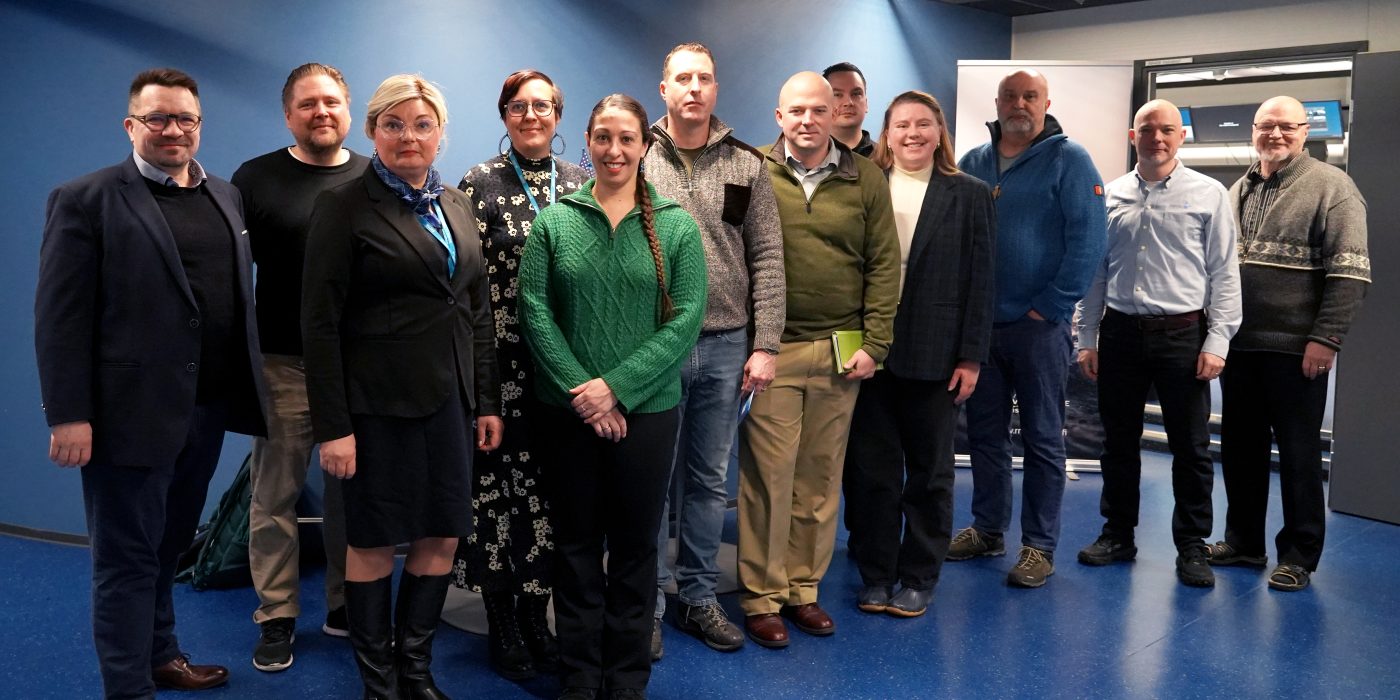
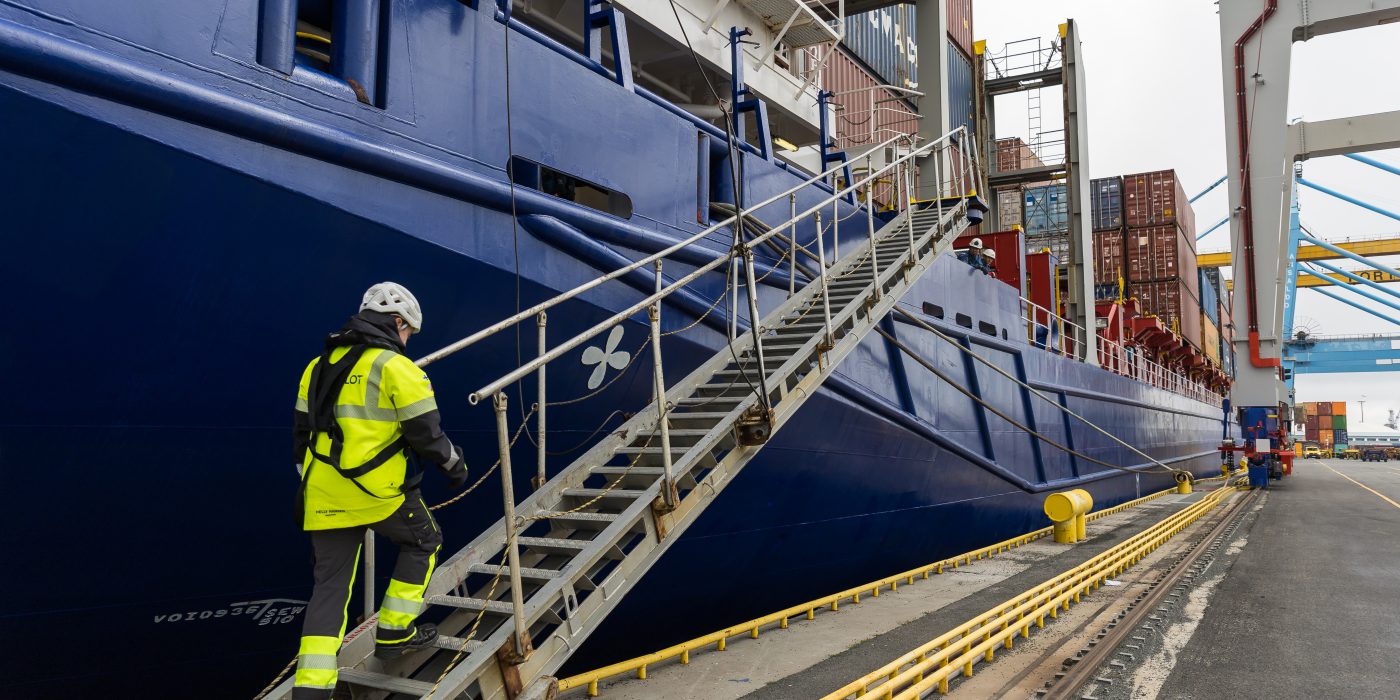
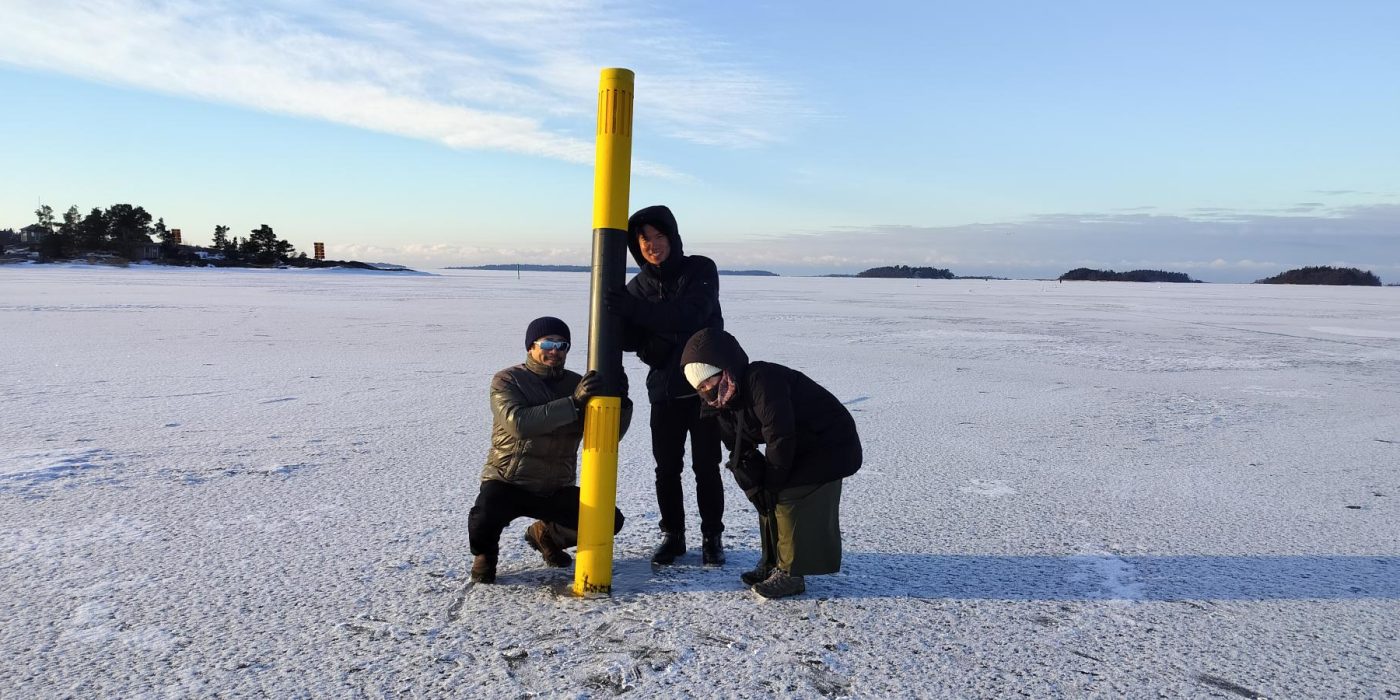
The afternoon of Maritime Network Day in Rauma highlighted the diversity of Arctic expertise and the importance of collaboration. The Maritime Logistics Research Forum brought together researchers, project actors, and industry experts to discuss changes in Arctic shipping, practical requirements, and future opportunities. The forum demonstrated that developing the Arctic region requires researched knowledge, practical understanding, and, above all, active dialogue.
Towards Carbon-Neutral Ports
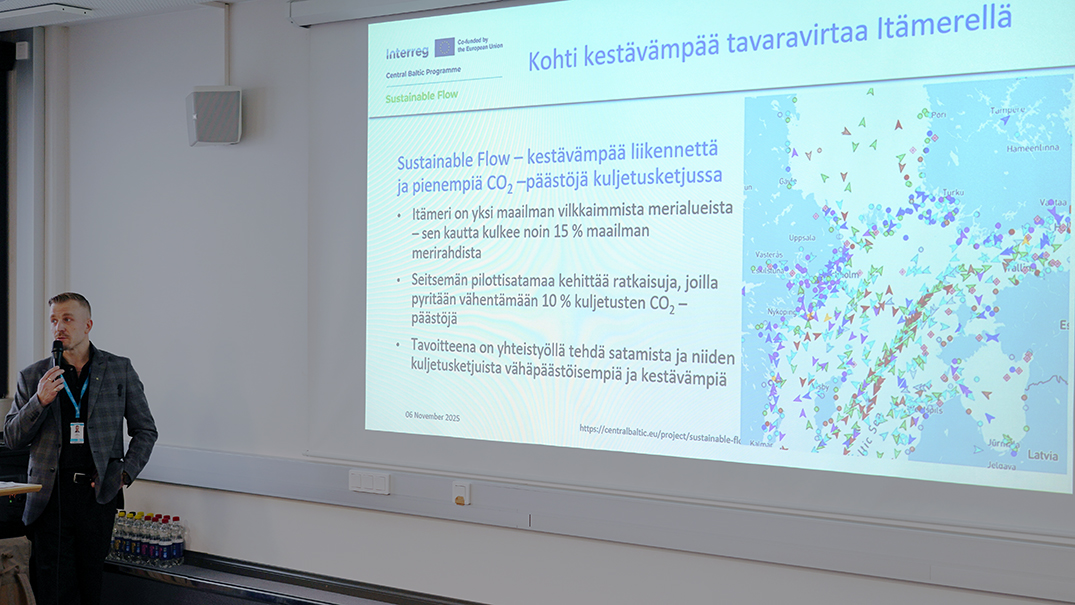
Mika Lindfors, Project Manager of the Sustainable Flow project, described the green transition of ports. He emphasized that carbon neutrality is not a single action but a comprehensive process built on energy efficiency, optimized mobility, and the digitalization of port infrastructure and processes. Ports have the opportunity to act as pioneers for the entire logistics chain and to advance environmental goals.
Lindfors also highlighted the importance of practical tools. Digital solutions and metrics help ports monitor energy consumption, carbon dioxide emissions, and operational efficiency. The project aims to ensure that pilot ports in the central Baltic Sea region can operate intelligently, safely, and sustainably.
The Future of Navigation in Arctic Areas
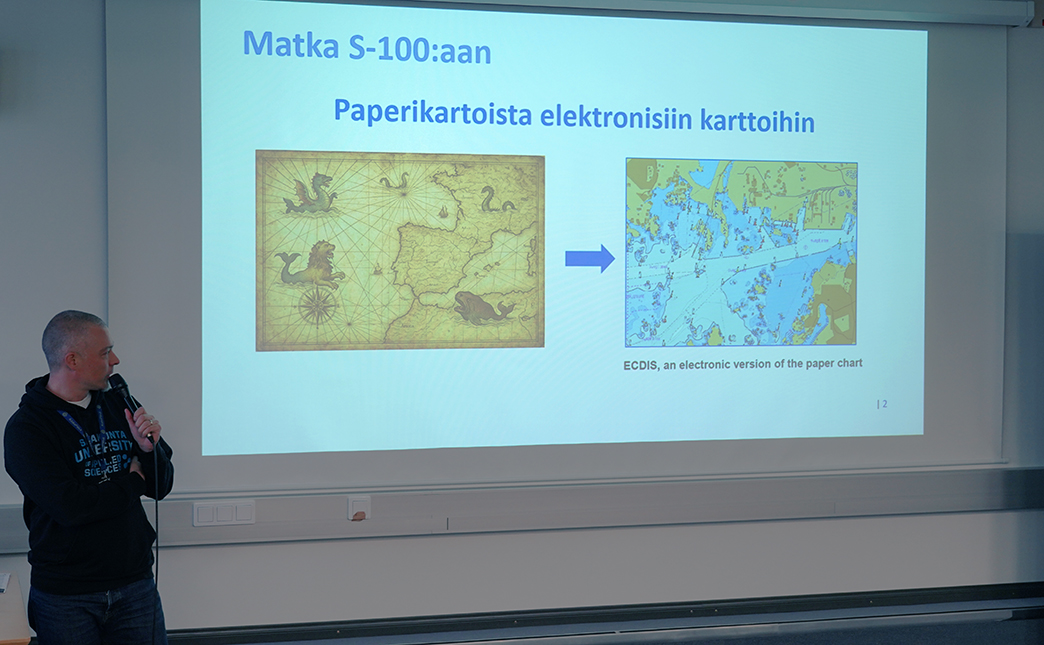
Antti Värre, Project Manager of the BS e-Nav project, presented the development of electronic nautical charts and their significance in Arctic regions. Arctic navigation requires up-to-date, reliable, and easily accessible information, as even a small error can lead to serious consequences. Electronic nautical charts are not just technical tools—they are systems that support decision-making and safety in challenging conditions.
Värre emphasized that S-100 standard charts enable more energy-efficient routes, safer navigation, and environmentally conscious operations. They also support maritime spatial planning and better decision-making at sea, allowing various activities to operate safely alongside each other.
Digital Solutions for Smoother Maritime Traffic
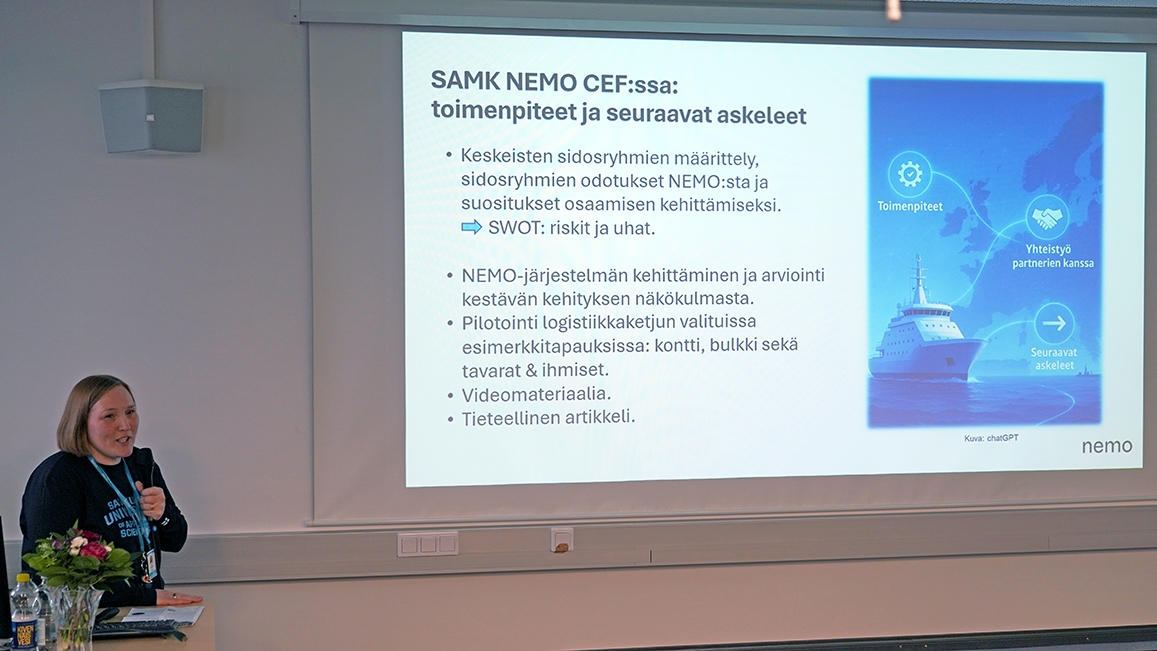
Kati Renholm, researcher in the NEMO CEF project, introduced the new NEMO system, which brings a national “single window” solution for maritime traffic notifications. The system allows notifications to move automatically between different authorities and actors at once, reducing administrative burden and streamlining processes.
Renholm stressed that NEMO is not just a technical innovation but also a tool to support sustainability and safety. Through pilots and metrics, the system is tested and developed to serve all actors effectively and support the advancement of Arctic shipping.
The Arctic Region as an Opportunity
Chief Researcher Minna Keinänen-Toivola highlighted a broader strategic perspective. She emphasized that Finland’s position as a logistics hub and a nation with Arctic expertise creates opportunities for research, innovation, and the development of sustainable shipping. The Arctic is not only a challenge but also a region where Finland has a significant role as a pioneer in knowledge and technology.
Keinänen-Toivola also underlined the link between research and decision-making: developing new solutions requires understanding both environmental conditions and technological possibilities. According to her, long-term collaboration, a culture of experimentation, and decisions based on researched knowledge are key to ensuring that Arctic shipping develops safely and efficiently.

A Common Direction in Developing Arctic Shipping
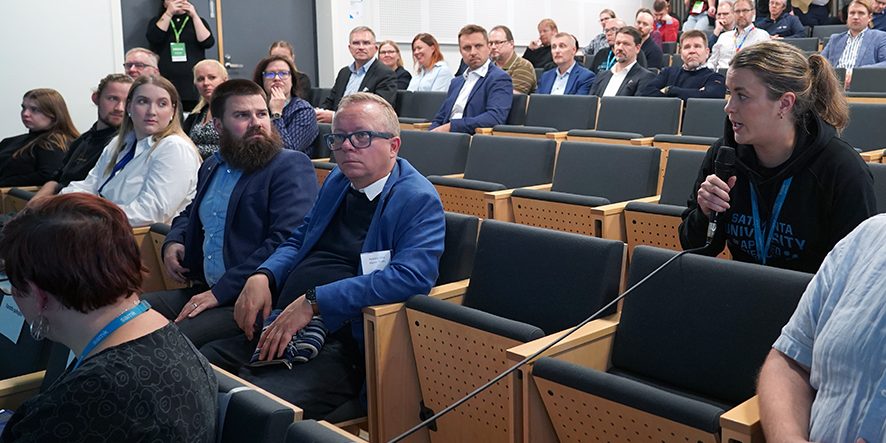
Perhaps the most significant outcome of the forum was the participants’ active dialogue. Numerous questions and observations were raised, and contributions complemented each other, creating a picture of the diversity of Arctic maritime logistics. The discussion demonstrated that Arctic research is not the effort of individual projects but a network that connects practical experience with research knowledge. A shared understanding emerged clearly during the forum: safe, efficient, and sustainable Arctic shipping is achieved through collaboration, knowledge sharing, and ongoing dialogue.
The Maritime Logistics Research Forum provided strong evidence that Arctic research and development progress best through cooperation. Dialogue between projects, actors, and participants strengthens expertise, broadens perspectives, and drives the field forward. The Arctic future will not be built on individual solutions but through a collective movement where knowledge and action go hand in hand.

Nemo CEF, Baltic Sea e-Nav, and Sustainable Flow are co-funded by the European Union.